Noise – Kahneman, Sibony & Sunstein
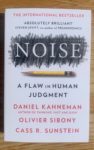
Human judgement is not infallible – no matter how unbiased we are, our judgement will be affected by unrelated thoughts, whether we are tired or hungry, and a hundred other things. This is “noise”. This book catalogues the different kinds … Continue reading
Are Universes Thicker Than Blackberries? — Martin Gardner
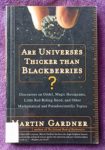
Martin Gardner is absolutely brilliant on puzzles and mathematical topics, but when he moves to other topics as he does in this collection, he writes as just a smart, opinionated and slightly old-fashioned commentator. The title essay is about the … Continue reading
Philosophy & Terry Pratchett
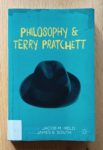
If you like Terry Pratchett then you will probably get a lot out of this book. If you also like philosophy then it’s an absolute shoo-in. I have read a few of Terry Pratchett’ novels and enjoyed them all immensely. … Continue reading
Postcards from the Edge – Carrie Fisher
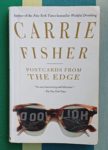
I read this book about 30 years ago and loved it. It may be a pretty easy read, but Suzanne the protagonist is very witty and likeable and the dialogue is packed – packed! – with one-liners and profundities in … Continue reading
The Course of Love – Alain de Botton
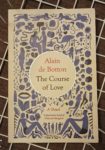
This is an entertaining chronicle of a couple’s relationship, starting from the very beginning. There is a lot (a lot) of analysis behind the story, which might sound heavy going but is actually what makes it all so engaging. I … Continue reading
Old Men in Love – Alasdair Gray
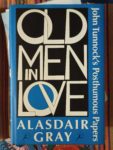
This is a cornucopia of several different books, fiction, modern politics and ancient history, all thrown together into a cohesive and visually pleasing package. I love it. Continue reading
Let’s Explore Diabetes With Owls — David Sedaris
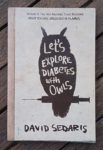
The more I read him, the more I like him. I read his Me Talk Pretty One Day before this book, and they’re quite similar. His autobiographical episodes are wry and amusing and contain a lot of truth even though … Continue reading
The Pink Jumpsuit – Emma Neale
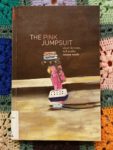
This is a collection of evocative, affecting, poetic, imaginative short stories. (Extremely short: microfiction, I think it’s called.) Some are slices of life, some are magical, some are funny, but they are all beautiful and satisfying to read. Continue reading
Reservoir 13 — Jon McGregor
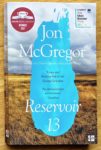
This wonderful novel opens on New Year’s Day, and a girl has gone missing: the whole village has turned out to search for her. It seems that we are in for a missing person mystery, or possibly a whodunit. As … Continue reading
The Flame of Reason — Christer Sturmark
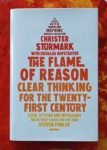
This is quite a well-argued and eminently reasonable defence of atheism. It’s much more measured and even-handed than the likes of Christopher Hitchens or even Richard Dawkins. It may still be preaching to the choir, but at least it’s a … Continue reading