 Two very interesting characters inhabit this story: Roza, the Prime Minister’s wife, a creative maverick who still manages to fit in with his circle; and her precocious young son Johnny, who is clever and manipulative and a bit of a nightmare. Throughout the novel, Roza tells Johnny a story featuring a large cast of characters including a nasty dwarf called Soon, and surreal happenings, all based on the other people in the novel. It’s like a terrifyingly twisted Enid Blyton romp, and it’s fun drawing parallels between Roza’s story and the novel.
The rest of Soon is nicely written and compelling, but the plot and the other characters are a bit more formulaic than Roza and Johnny. It’s a story of powerful people behaving badly. The right-wing Prime Minister himself is popular, but is also a cynical, amoral figure; a parallel here to the current New Zealand political scene, and also to another novel within this novel.
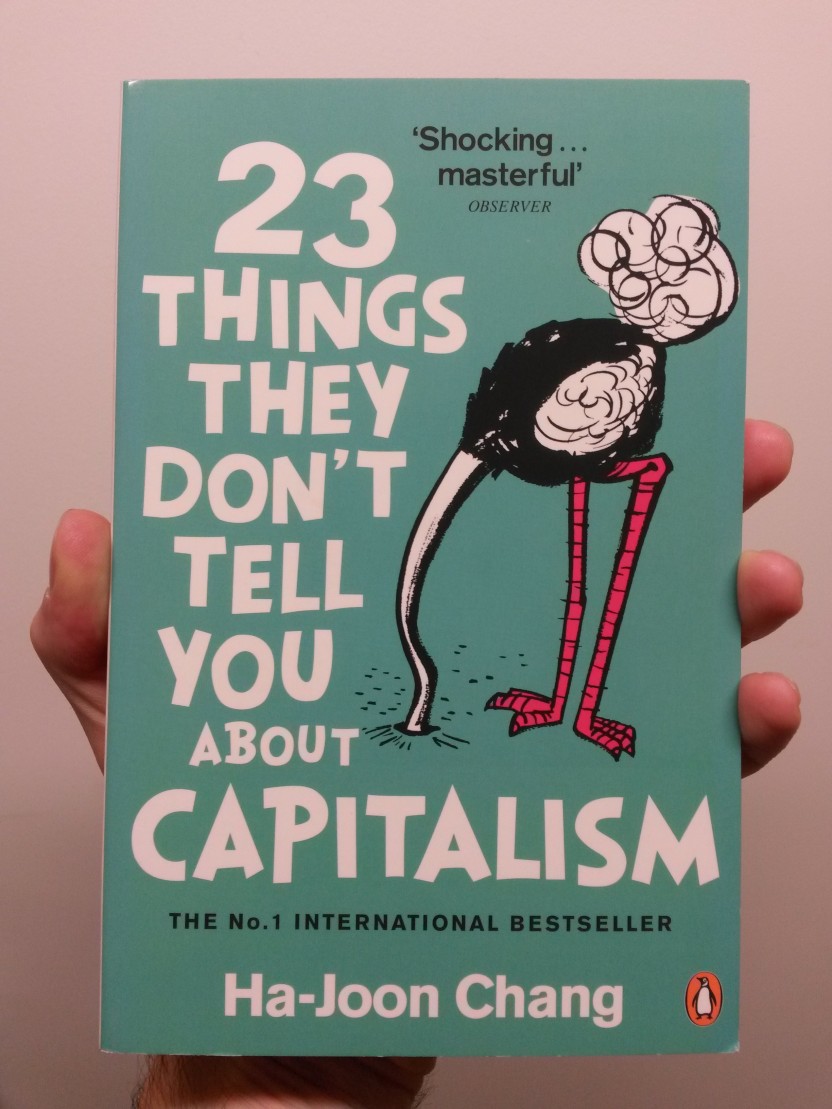 The title describes the book: 23 things, some counterintuitive, some perhaps contentious, they you may not have realised about the economic system that the world runs on.
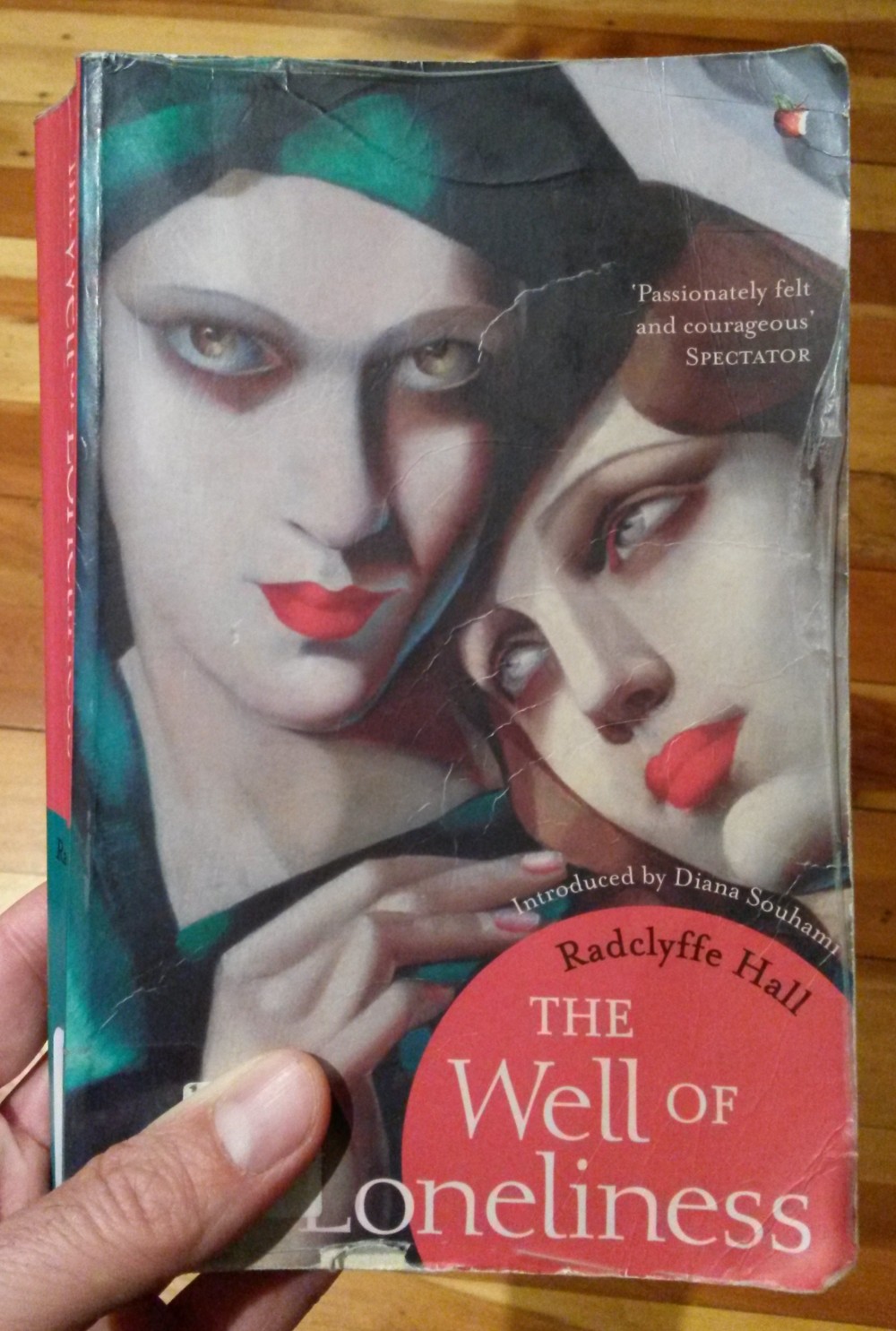 This story is about a tomboyish girl called Stephen. It traces her life from her birth and upbringing in a wealthy and genteel English family in the late 1800s, through the first world war and on to a successful career. She never feels quite comfortable conforming to the model of a well-brought-up young woman, and it takes many years to realise what the reader already knows, that she is (in her own words) an “invert”. Of course, such things were not discussed back then, at a time when the authorities did not even acknowledge lesbianism’s existence, and would have made it illegal if they had. The book was banned (and burned) on publication in 1928 in England.
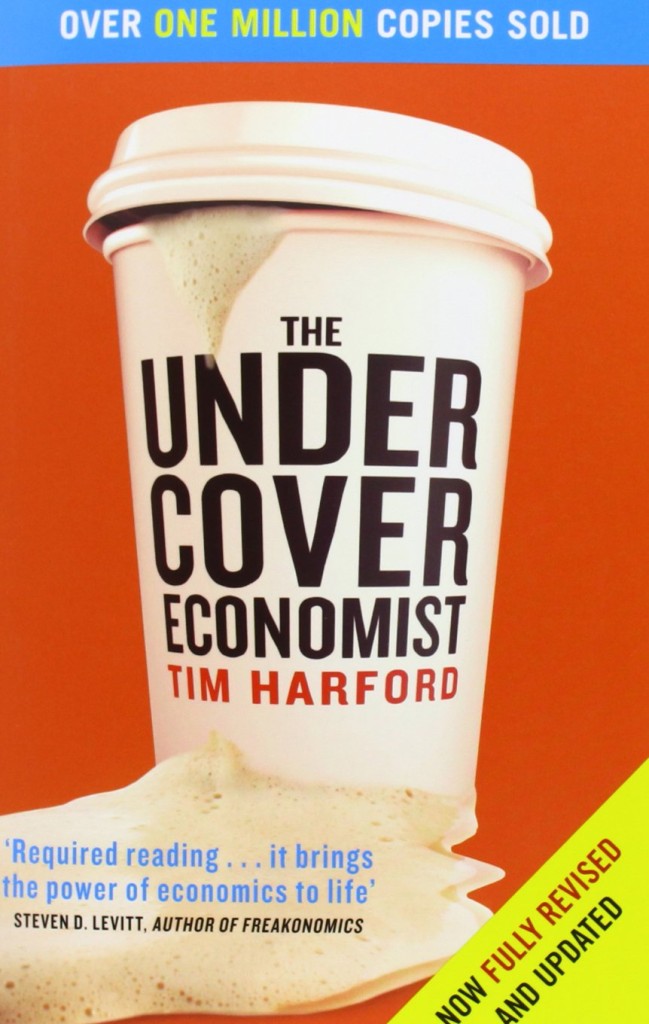 The Undercover Economist is full of useful explanations of many orthodox economic concepts. It explains why free markets are so powerful and what economic efficiency means. It also contains the most accessible explanation of the subprime mortgage crisis as I have ever read. But when all you have is a hammer, everything looks like a nail. For Mr Harford, like many others, markets are that hammer. He does a decent job of trying to address possible difficulties with market-based solutions, but he ignores some fundamental problems.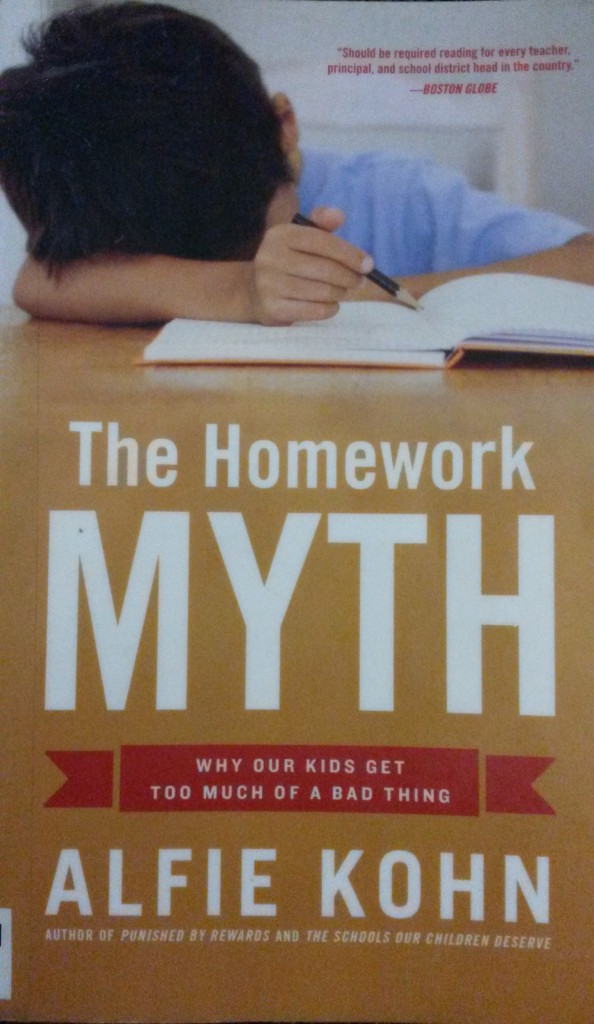
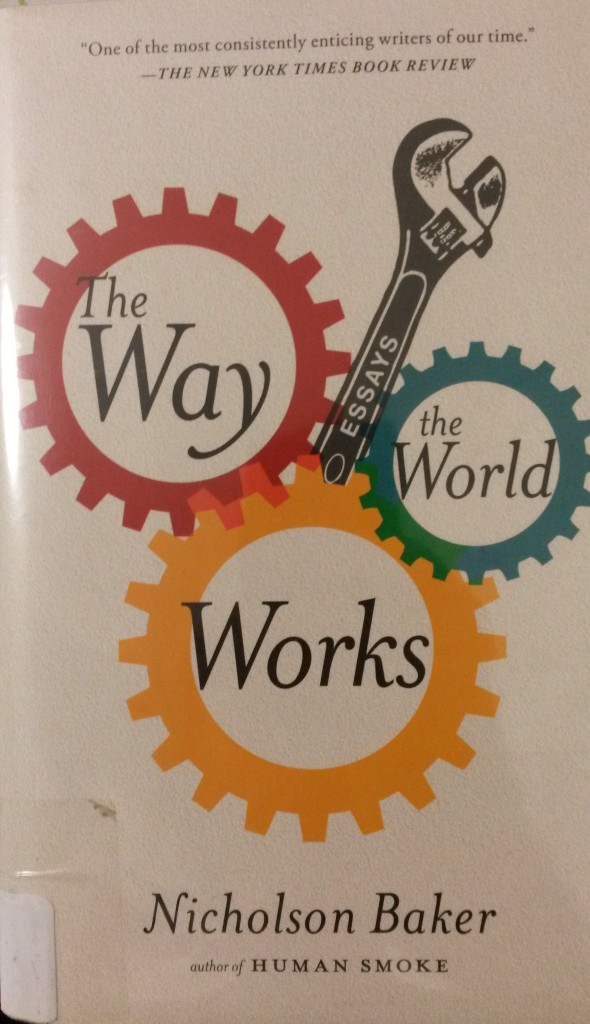 This is a collection of essays on topics that have caught Baker’s eye. There are reports of his (in)famous efforts to preserve library newspaper collections, as well as thoughts on pacifism and video games, and a fascinating story of his brief immersion in the world of Wikipedia editing. As always, he comes across as intelligent and thoughtful, perhaps excessively so. But he has a nice turn of phrase and a strong social conscience.
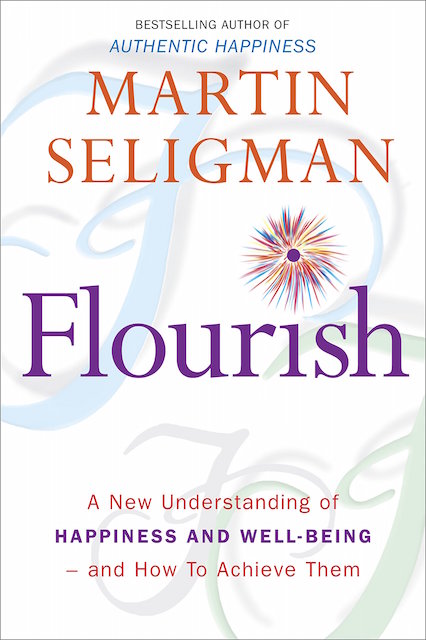 Human well-being consists of more than just happiness. In this book, Martin Seligman presents one way of breaking down well-being into its components, so we can try to improve all of them and enable ourselves to flourish. PERMA is the acronym for the five components he identifies:
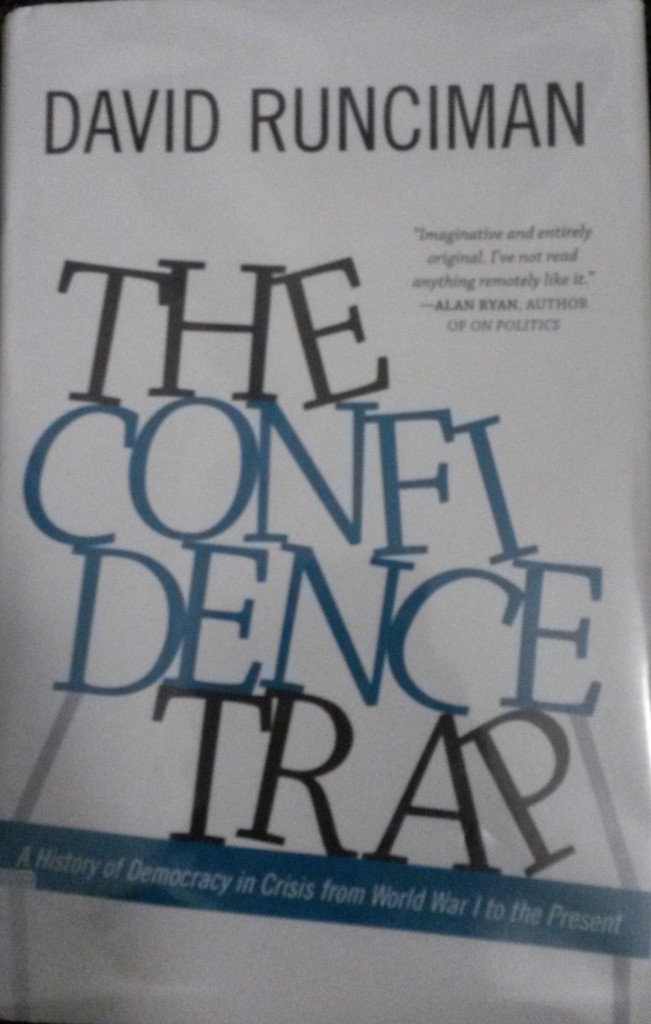 An interesting survey of the working of democracies, as illuminated by their responses to the last hundred years of democratic crises. The idea is that the inherent flexibility of democracies is their main strength but also an inescapable weakness: