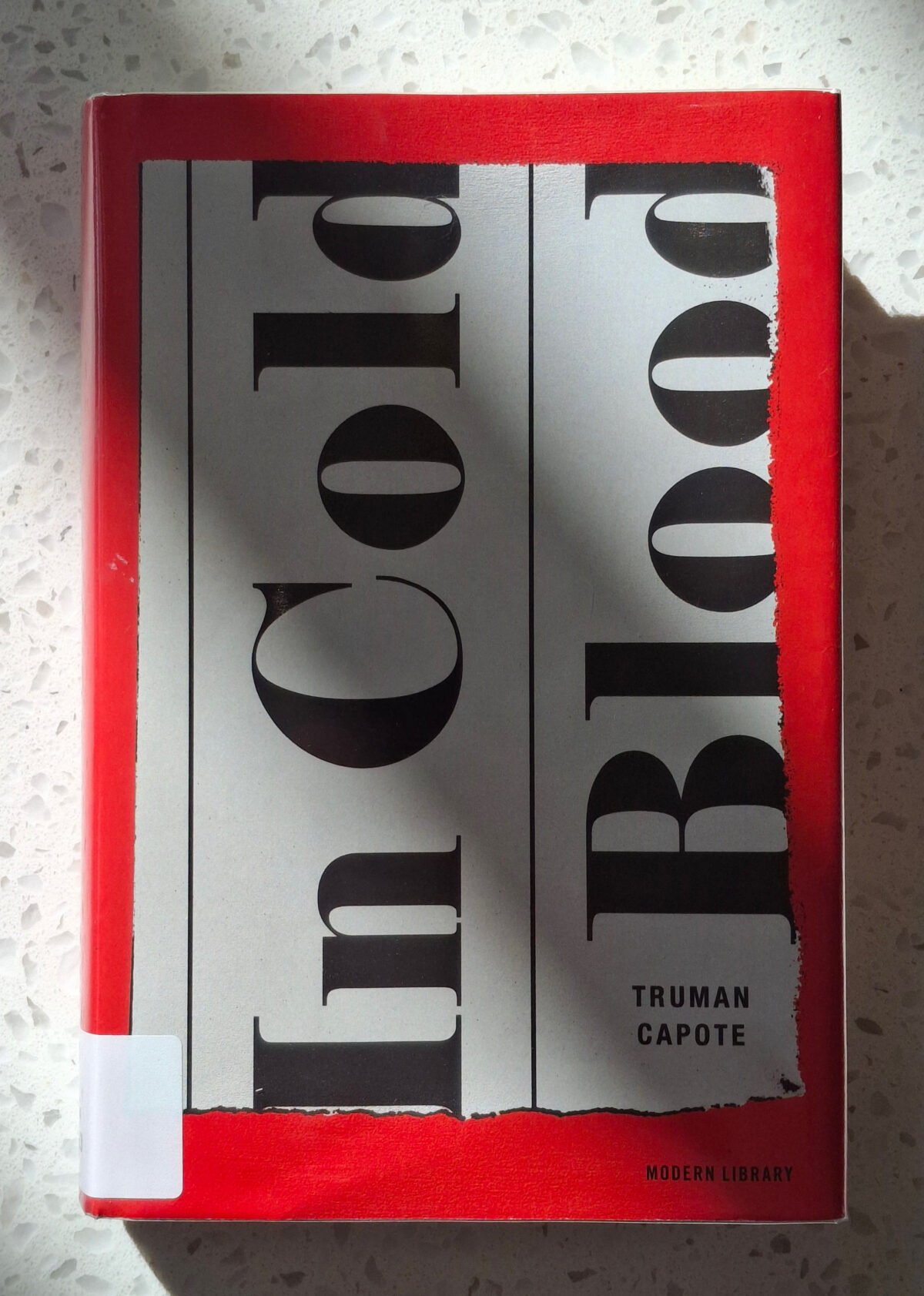
In 1959 the Clutter family, of Holcomb, Kansas, USA, were all murdered by a couple of home invaders. Truman Capote decided to go to Kansas to research and write this book about the crime and the investigation. Fortunately, he stayed with the project long enough for the crime to be solved – I don’t think this book would have been quite as good otherwise.
From the beginning, we know about the crime and we also know that the killers were Perry Smith and Richard Hickock. The book interleaves the aftermath of the crime (with the bereft community, the fleeing perpetrators, and the doughty investigators) with the histories of the murderers and the victims leading up to the fateful evening.
Most of the characters are as you would expect. The murdered family are decent, upstanding, likeable people. The community are good honest country folk. The investigators are focussed, conscientious, indefatigable. And then there are the killers. Richard (“Dick”) Hickock is a classic small-time criminal, drifting through life (and in and out of prison) on tall stories and dud cheques. But Perry Smith, after a nightmare childhood, comes across as an unstable psychopath:
“I didn’t want to harm the man. I thought he was a very nice gentleman. Soft-spoken. I thought so right up to the moment I cut his throat.”
Unsurprisingly, the writing strikes this modern reader as being a bit fussy. But after all, it is sixty years old, and I think it strikes the right tone: part reportage, part old-fashioned understated sensationalism. And despite the grim subject matter, there is a good amount of wry humour. Sometimes I actually smiled, as when investigator Harold Nye questions a flophouse landlady:
She was seventy-four years old, but in Nye’s opinion, “looked younger—maybe ten minutes younger.”
…
“Well, I’m just a dizzy blonde. I believe you. But I wouldn’t tell that tale to any brunettes.”
To be sure, this page was probably the high point of humour in the book.
Capote claimed that every word of his book was true; but apparently quite a few details were made up for literary effect. It probably made for a better book (Capote was a writer, not a reporter). So if you really want the facts, you should supplement this book with other sources (“do your own research”, as they say). But if you just want to read one of the first and best real-life crime novels, In Cold Blood is atmospheric, compelling, and (more or less) true.