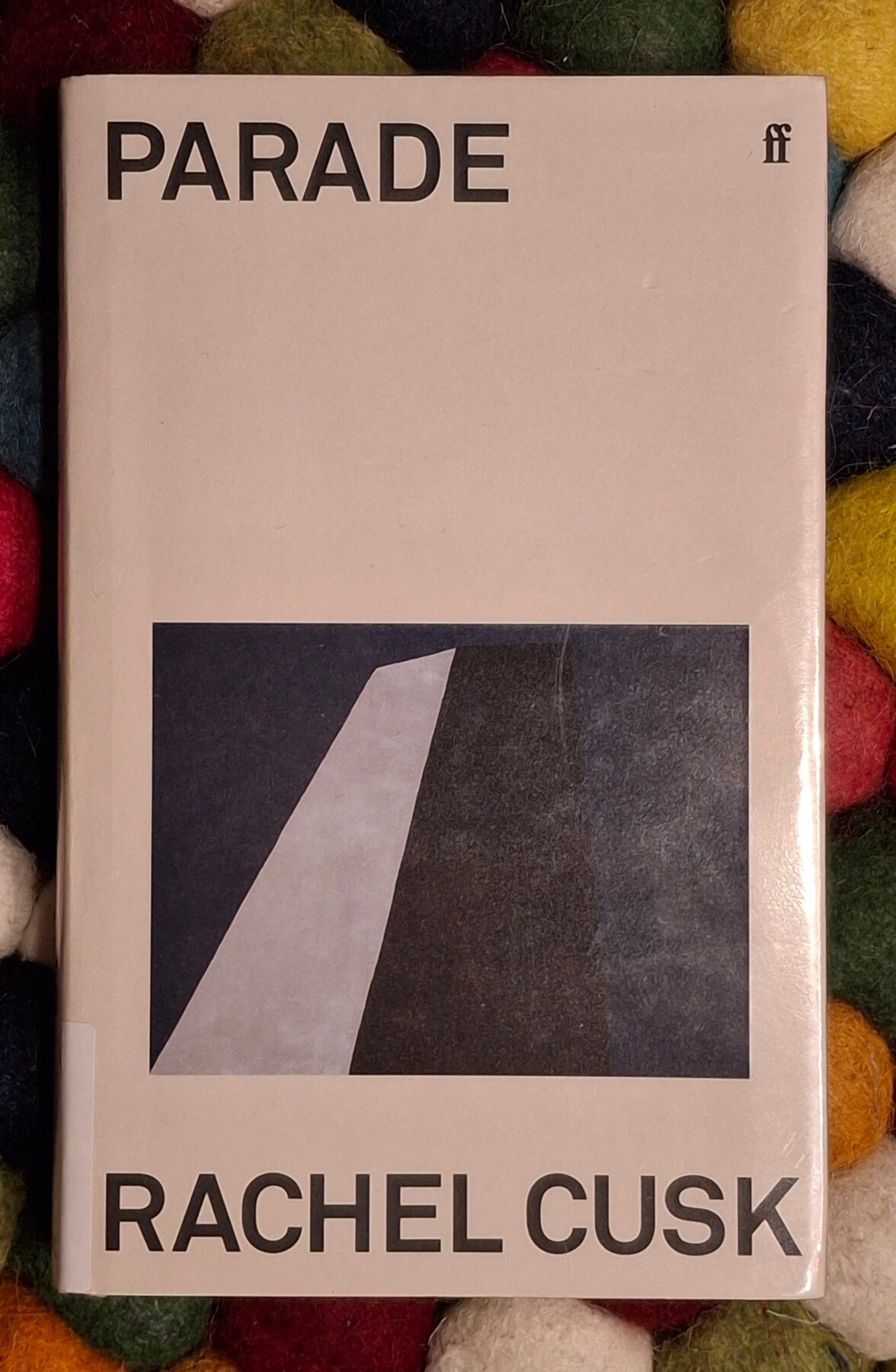
Parade is quite austere in style, but still packs an emotional and intellectual punch.
The book is in four sections; they are connected, with a few characters’ stories intertwined throughout. Among the cast are three artists, all just called “G”. This is faintly confusing because the narrative viewpoint sometimes changes abruptly – when “G” is mentioned it’s not always immediately obvious which “G” it is. Many of the other characters aren’t named at all. This carries over to the setting – we find out almost nothing about where these people live, even what part of the world, and there’s very little detail. There is also not really a plot as such; more like lots of vignettes with associated discussion. The focus is on people’s internal states rather than external happenings.
All this makes for quite an abstract novel – maybe more of a meditation on identity, artists, family and gender. But still Cusk manages to draw some likeable characters. My favourite is a gallery director (referred to only as “the director”), who hosts a dinner in a restaurant. She had been running a big exhibition based on the work of one of the “G” artists, but the event was cut short because a man killed himself by jumping off the gallery mezzanine to the foyer below. The conversation at the dinner is thoughtful, philosophical, wise and interesting. And frankly, pretty unrealistic, but that’s why it’s so compelling and affecting.
A lot of the novel is highly stylised like this, omitting extraneous detail and putting its themes into sharp focus. I found myself immersed while reading, but still thought a lot about it later – enough to pick the book up again and reread passages. Cusk has written several novels so I will be looking into those soon.